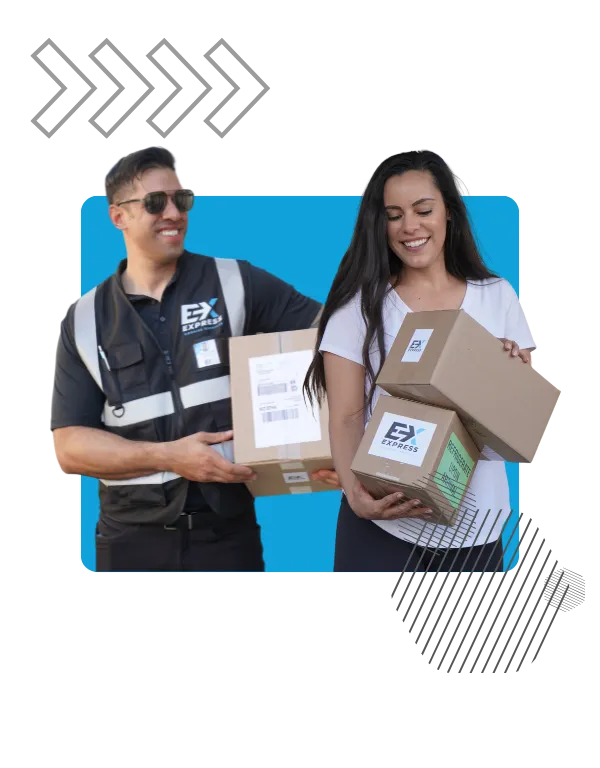
Reliable Courier & Logistics Solutions
At Express Courier Services, we understand that your deliveries are more than just packages — they represent commitments, deadlines, and trust. That’s why we’ve built a courier system designed for speed, security, and accuracy. From urgent medical supplies to sensitive legal files, we deliver with the highest level of care. Our statewide coverage ensures that no matter where you are in California, dependable service is always within reach. We offer flexible solutions for businesses of every size, from one-time deliveries to long-term dedicated driver programs. Our experienced team and advanced logistics ensure smooth handling and real-time tracking at every stage. We take pride in being the courier service businesses rely on to keep operations running smoothly. With Express Courier Services, you gain a partner who delivers peace of mind with every shipment.
Start Transforming Your
Logistics Landscape
Reliable Courier & Logistics Solutions Across Industries
Your Premier Choice for Critical
Medical Supply Deliveries
Industry Highlights
Healthcare & Pharma
Secure, compliant delivery for clinics, labs, and pharmacies.
Healthcare & Pharma
Cold-chain options, chain-of-custody, and real-time tracking for temperature-sensitive shipments.
Click to Learn More
Legal Services
Time-sensitive filings and confidential document delivery.
Legal Services
Secure handling, proof of delivery, and rush courthouse runs you can trust.
Click to Learn More
Retail & E-commerce
Fast last-mile and same-day delivery for online and in-store.
Retail & E-commerce
Flexible windows, returns management, and live ETAs to delight customers.
Click to Learn More
Manufacturing & Industrial
Critical parts and MRO deliveries to keep lines running.
Manufacturing & Industrial
Expedited hot-shot runs, vendor pickups, and scheduled route coverage.
Click to Learn More
Government & Education
Dependable inter-office and campus courier services.
Government & Education
Audit-ready logs, secure handling of records, and scheduled routes across sites.
Click to Learn More
Food & Beverage Logistics
Fresh, safe, and timely deliveries for perishables.
Food & Beverage Logistics
Temperature-controlled options, HACCP-aware handling, and route optimization.
Click to Learn More
Why
Choose
Express Courier Services?

Speed
Same-day & STAT deliveries

Security
HIPAA, chain-of-custody, tamper-proof handling

Technology
Real-time GPS tracking & proof of delivery

Coverage
Serving all of California with local expertise
Tailored Solutions for Every Specialty Medication
From small parcels to sensitive medical supplies, our tailored courier solutions meet the needs of every industry we serve.

On-Demand & Same-Day Delivery

Scheduled Routes & Recurring Logistics

Temperature-Controlled Transport

Secure & Regulatory-Compliant Handling
Specialized
Logistics
for
Every Industry
We understand that each sector has unique requirements. That’s why our solutions are tailored — whether you’re a pharmacy, law firm, manufacturer, or retailer.
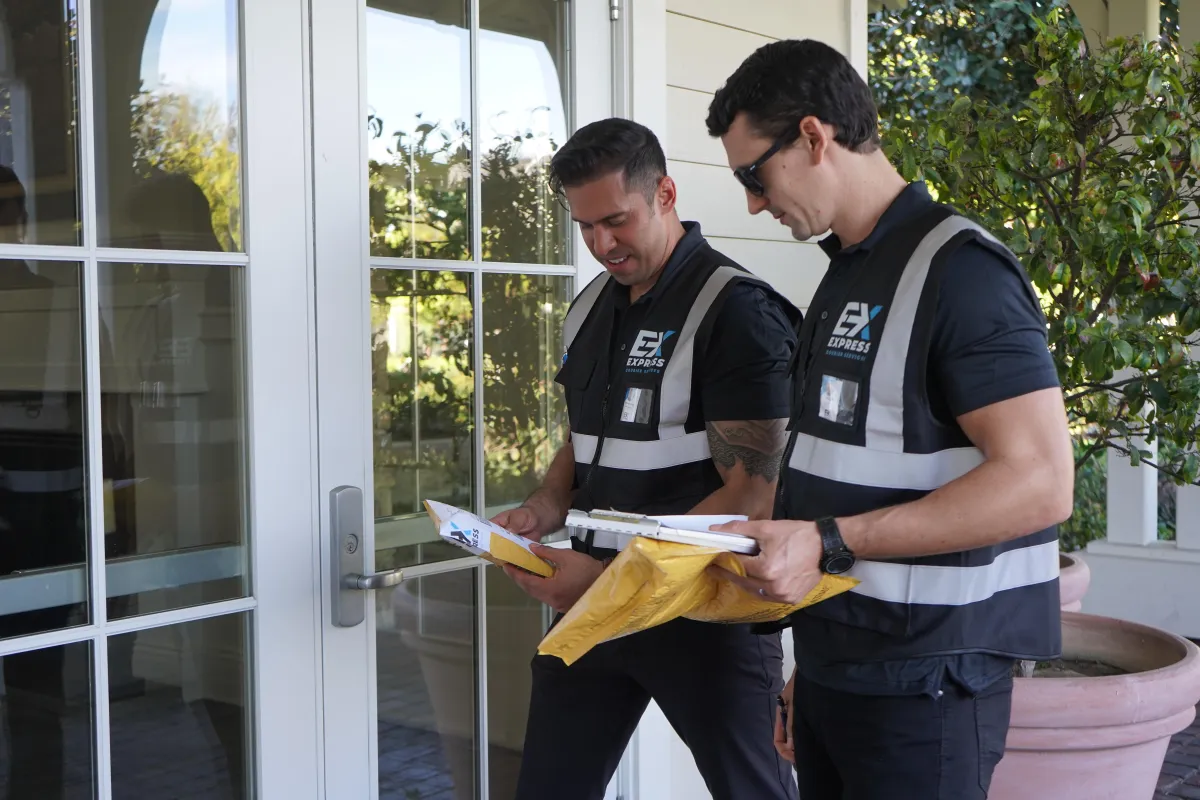
Track
Every
Delivery
in
Real
Time
GPS & route optimization
Proof-of-delivery signatures/photos
Secure client portal
Trusted Across California
Michelle Rodriguez
Pharmacy Manager
"Express Courier Services has seriously transformed the game for us at Central Health Pharmacy. As a Pharmacy Manager, the constant juggling of medical supplies can be a headache. But with these guys, it's like they've taken the stress out of my job.
Now, I don't lose sleep over running out of essentials. Their deliveries are a lifesaver!"

Alex Nguyen
Pharmacist
"These guys at Express Courier Services are next level! Being a pharmacist is no joke, and precision is everything. Unlike other couriers that left us biting our nails, these guys handle our sensitive materials like pros. It's a breath of fresh air - finally, a courier service that gets it right every time! Highly recommended!"
Dr. Jonathan L. Kim
Medical Director
"Express Courier Services is the secret weapon in our urgent care playbook.
As a Medical Director, I can't afford delays. These folks have cracked the code to prompt deliveries. Now, we can focus on what really matters taking care of our patients without the hassle of late shipments. Working with them is always a pleasure."
Need to verify our reliability?
Our Sales team will provide you with letters of recommendations from our current clients.
Logistics Insights & Industry Trends
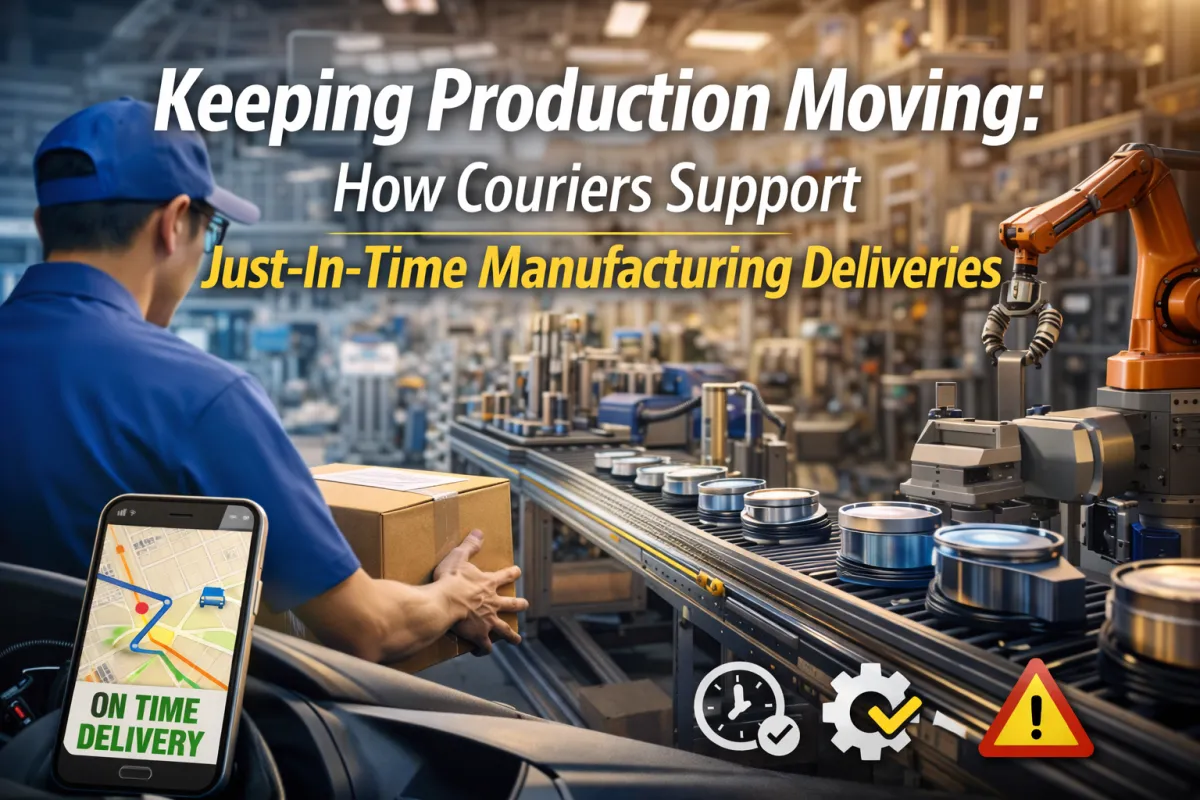
Keeping Production Moving: How Couriers Support Just-In-Time Manufacturing Deliveries
Just-in-time (JIT) manufacturing is built around a simple idea: materials and components arrive as close as possible to when they’re needed, instead of sitting in storage. That precision protects cash flow and reduces waste, but it also creates a new vulnerability—when a single part is late, the entire schedule can slip. If you want a definition straight from a mainstream business reference, Investopedia’s JIT overview is a quick refresher (https://www.investopedia.com/terms/j/jit.asp). And if you want to see how deeply JIT is tied to modern production systems, Toyota’s explanation of Just-in-Time in the Toyota Production System is a useful reference point (https://global.toyota/en/company/vision-and-philosophy/production-system/index.html).
This is exactly where time-critical courier networks become more than “delivery.” In a JIT environment, couriers are an operational safety layer that prevents line stoppages, supports supplier reliability, and gives production teams visibility when the plan inevitably changes.
Why JIT needs couriers more than ever
In a traditional manufacturing model, buffer inventory can absorb delays. In JIT, buffer inventory is intentionally minimized, which means you’re trading storage cost for timing precision. That can be a smart trade—until there’s traffic, a supplier short-ships, a machine goes down, or engineering needs an urgent replacement part.
When JIT works, it works because every link stays synchronized. When it breaks, it breaks fast. The difference between a small disruption and a major downtime event often comes down to whether you can move the right item to the right dock immediately, with a clear chain of custody and proof it arrived.
The 4 delivery scenarios that keep production from stalling
Most JIT courier activity falls into four real-world scenarios. The winning move is designing your courier strategy around all four, instead of treating deliveries as “random emergencies.”
1) STAT replacement parts to avoid downtime
A bearing, sensor, belt, pump, PLC component, or critical tool breaks—and production cannot proceed without it. A courier’s job here is speed plus certainty: fast pickup, direct drive, real-time visibility, and proof of delivery.
2) Supplier-to-line hotshots when inbound timing slips
Sometimes the supplier has the part, but it’s not arriving on the planned schedule. A courier can bridge the gap between “arrives tomorrow” and “arrives in two hours,” especially for local and regional suppliers.
3) Planned “milk runs” that keep inventory lean without risking outages
Not every JIT delivery is a fire drill. The best-run plants use scheduled routes to replenish frequently used components in smaller batches at predictable times. Route-based courier programs reduce variability while still keeping on-hand inventory tight.
4) Inter-plant transfers and QA/engineering handoffs
Manufacturers often move tooling, calibration devices, electronics, prototypes, and QA samples between sites. These aren’t always “urgent,” but they are often sensitive, high-value, and time-bound—meaning tracking and careful handling matter as much as speed.
What “good” looks like: visibility, proof, and exception control
Speed alone isn’t enough in manufacturing logistics. What you actually want is predictability under pressure. That comes from three things:
First is real-time visibility—knowing where the driver is, what the ETA looks like, and whether the route is still on track. Second is proof of delivery—so receiving, production, and management can confirm the handoff immediately. Third is exception control—when something changes, you need proactive updates and a clear record of what happened.
How to build a courier playbook for JIT manufacturing
If you want courier support to feel like part of operations (not an afterthought), build a simple playbook. Start by classifying shipments into tiers: true emergencies (STAT), same-day critical replenishment, and scheduled route replenishment. Then define how orders are requested, who approves, what information is mandatory (dock, PO/reference, contact, handling notes), and what “done” looks like (POD requirements and delivery confirmation steps).
You’ll also want a clear escalation path for after-hours or weekend production, because JIT issues don’t care about business hours. A courier partner with 24/7 support can be the difference between a controlled response and a scramble.
The hidden ROI: fewer line stoppages and less expensive “over-buffering”
Many manufacturers respond to delivery risk by increasing buffer stock, which quietly raises carrying costs and ties up cash. Courier readiness gives you another option: keep inventory lean without accepting avoidable downtime risk. The courier network becomes a flexible safety net—one you can scale up when production is tight and scale down when demand normalizes.
For a logistics-industry perspective on JIT inventory and its tradeoffs, Inbound Logistics has a useful explainer you can cite externally: https://www.inboundlogistics.com/articles/just-in-time-inventory/
Final takeaway
JIT manufacturing is a promise: “we’ll make what’s needed, when it’s needed.” Couriers help keep that promise when real life hits the schedule. With the right mix of STAT response, route-based replenishment, real-time tracking, and clean proof-of-delivery workflows, couriers stop being a last-minute expense and become a reliability layer that keeps production moving.
If you want to tie this to a call-to-action, point readers to your service overview and visibility stack:
https://www.expcourierservices.com/courier-services
https://www.expcourierservices.com/technologies

Alpha Gabriel Marquina
Start Transforming Your
Logistics Landscape
Need a Delivery Partner You Can Rely On?
Get a custom courier solution for your business today.
Ready to Experience Reliable Courier Services?